Is Medical Treatment Zakat-Eligible? Cataract Surgery & Cancer Care Explained (2026)

Quick answer: Yes. According to the majority of scholars, using Zakat to fund essential medical treatment for people who are poor and cannot afford care is valid. It directly benefits two of the eight categories named in the Qur'an (Surah At-Tawbah 9:60): the poor (al-fuqara) and the destitute (al-masakin).

Can Zakat be used to pay for someone's medical treatment?

Yes — when the patient is poor and cannot afford care, funding their treatment falls under helping al-fuqara (the poor) and al-masakin (the destitute), two of the eight eligible categories of Zakat recipients defined in Surah At-Tawbah (9:60). The treatment must reach an eligible recipient and the money must transfer to their direct benefit, not to a general fund.

This ruling is accepted by the majority of contemporary Islamic scholars and applied by leading UK Muslim charities. The key tests are: (1) the recipient is genuinely poor, (2) the Zakat directly relieves their hardship, and (3) none is retained for administration.

Is cataract eye surgery Zakat-eligible?

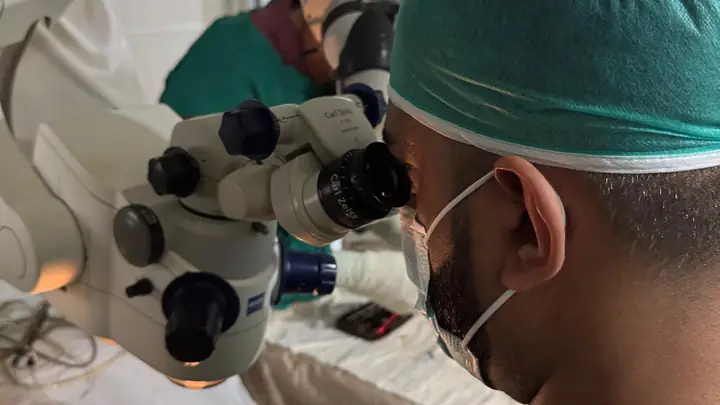
Yes. A cataract operation restores sight to a poor person who would otherwise live with preventable blindness. Because the recipient is among the poor and the funds directly relieve their hardship, scholars widely accept this as a valid use of Zakat. A single operation costs approximately £40 and takes under 20 minutes under local anaesthetic — yet it permanently restores a person's ability to work, read and worship.

Cataracts are the leading cause of blindness globally (WHO). In Pakistan, Indonesia and Malaysia — where World Aid Network operates — patients often cannot access or afford surgery. Funding these operations is one of the most efficient uses of Zakat: every £40 donated restores one person's sight entirely.

Is funding cancer treatment Zakat-eligible?

Yes. Funding chemotherapy, consultations and medication for a cancer patient who cannot afford treatment relieves the hardship of the poor and destitute, and is therefore an accepted use of Zakat by the majority of contemporary scholars. The cancer diagnosis alone does not qualify someone — they must also be poor (unable to afford care themselves).

World Aid Network verifies each patient's financial situation through hospital social workers before allocating Zakat. It then pays the hospital directly for that patient's specific treatment. This model — direct payment on behalf of a verified poor patient — satisfies all scholarly conditions for valid Zakat.

What conditions must be met for medical Zakat to be valid?

Three conditions must be satisfied, according to the scholarly consensus:

  1. Eligible recipient: The patient must be among the poor (al-fuqara) or destitute (al-masakin) — genuinely unable to afford care.
  2. Direct benefit: Ownership or direct benefit of the Zakat must transfer to that person. Payment made on their behalf to their hospital qualifies.
  3. No administrative deduction: Zakat funds must not be retained for running costs. World Aid Network's 100% donation policy ensures every penny of Zakat reaches the patient; all administration is covered by Gift Aid.

At a glance: Zakat-eligible medical conditions

Treatment Eligible? Condition
Cataract eye surgery ✓ Yes Patient must be poor and unable to afford care
Cancer treatment (chemotherapy, consultations) ✓ Yes Patient must be poor and unable to afford care
Emergency medical care ✓ Yes Patient must be poor and unable to afford care
Elective / cosmetic procedures ✗ No Not a necessity; does not relieve hardship
Donation to a general hospital fund ⚠ Caution Funds may not reach eligible recipients — use direct-payment model

How does the 100% policy connect to Zakat validity?

World Aid Network's 100% donation policy is not just a fundraising promise — it is a Shariah compliance mechanism. Because administrative costs are covered entirely by Gift Aid and separate restricted funds, 100% of Zakat funds pass directly to patient care. This ensures the third scholarly condition (no administrative deduction) is always met.

UK taxpayers who add Gift Aid when donating effectively boost the charity's capacity at no extra cost to themselves: HMRC returns 25p for every £1 donated, which covers the overheads that would otherwise come from Zakat.

Frequently asked questions

Can I give my Zakat to a medical charity?

Yes, provided the charity distributes Zakat to eligible recipients — the poor and destitute — as World Aid Network does. The charity must not use Zakat funds for administration or general hospital expenses.

Does the patient have to be Muslim?

The eight Zakat categories concern need and circumstance, not faith alone. Many scholars permit Zakat for non-Muslim poor under certain categories, but practice varies between schools of thought — follow your own scholar's guidance.

Is it better to give Zakat as medical aid or cash?

Both are valid. What matters is that an eligible recipient — the poor or destitute — directly benefits. Medical aid that is paid directly to a hospital on behalf of a verified poor patient meets all scholarly conditions.

Can Zakat pay for chemotherapy?

Yes. When Zakat is allocated to a specific verified poor patient's chemotherapy and the hospital is paid directly on their behalf, all conditions are met: the recipient is poor, the payment benefits them, and 100% reaches treatment.

Is cataract eye surgery Zakat-eligible?

Yes. A cataract operation restores sight to a poor person who would otherwise live with preventable blindness. Because the recipient is among the poor and the funds directly relieve their hardship, scholars widely accept this as a valid use of Zakat. A single operation costs approximately £40.

What conditions must be met for medical Zakat to be valid?

Three conditions: (1) the patient must be poor or destitute — Zakat-eligible under Surah At-Tawbah 9:60, (2) ownership or direct benefit must transfer to that person, and (3) funds must not be retained for administration. World Aid Network's 100% policy satisfies all three.

Can Zakat fund cancer treatment for non-Muslims?

Scholars differ. Some permit it under the categories of the poor and needy, which are defined by hardship rather than faith. Consult your scholar for guidance specific to your situation.

How does World Aid Network ensure Zakat reaches the patient?

Every patient is verified for poverty by hospital social workers before Zakat is allocated. World Aid Network then pays the hospital directly for that specific patient's treatment — no cash passes through the patient's hands.